


Quick summary: Industrial metal shelving is at the heart of any efficient logistics system. To choose the right solution, you should consider:
- The type of load: pallets, boxes picking or long, irregular loads.
- Stock turnover and workflow (FIFO or LIFO systems).
- The quality of the material (steel) and compliance with safety standards such as UNE-EN 15635.
What is industrial metal shelving and why is it essential in logistics?
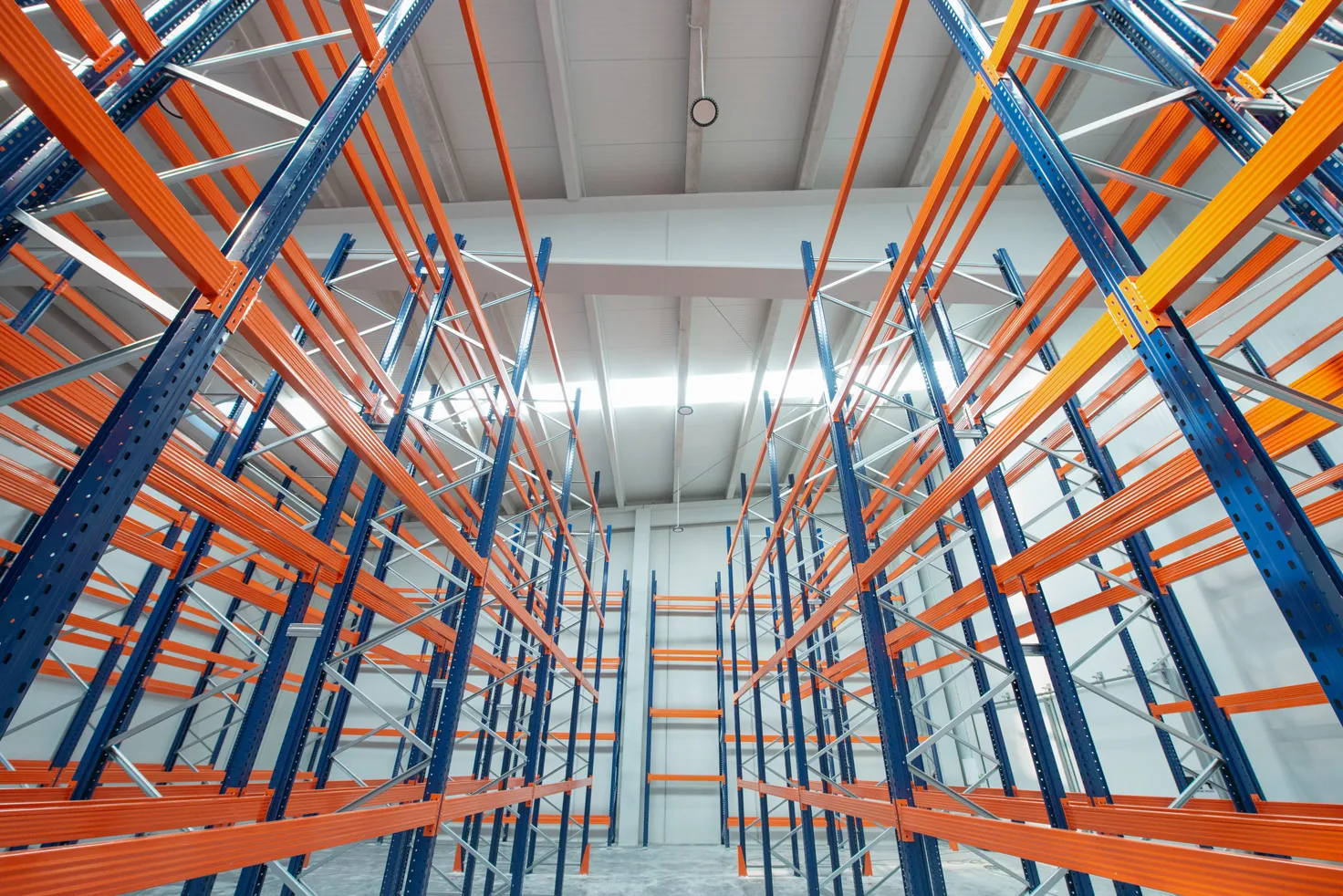
An industrial metal shelving unit is a sturdy structure, usually made of high-strength steel, designed for the vertical storage of goods. Its purpose is to maximise a warehouse’s storage capacity, ensure the safety of staff and facilitate quick and orderly access to stock.
Unlike domestic or commercial shelving, industrial shelving systems are subject to rigorous engineering calculations to support tonnes of weight on a daily basis, withstand impacts from material-handling machinery (such as forklift trucks) and adapt to the specific operational requirements of each facility.
Main types of warehouse shelving
The logistics sector requires specific solutions. At Estanterías Record, as manufacturers, we design and customise the following systems:
1. Conventional palletising
It is the most versatile and widely used system. It allows direct, individual access to each stored pallet. It is ideal for warehouses with a wide variety of stock items and where product turnover is high or unpredictable.
2. Compact Palletising (Drive-in)
It eliminates the need for aisles between the racks, allowing the forklift to drive right into the structure. It maximises available space and is ideal for storing large quantities of the same item (homogeneous products) with low turnover.
3. Cantilever shelving
Designed without front columns, they use cantilever arms to support long, bulky or irregularly shaped loads (pipes, wood profiles, beams, metal sheets).
4. Picking racks (manual loading)
Systems designed for order picking where goods are loaded and unloaded manually. They accommodate boxes or loose items and can be combined with mezzanine levels to make the most of the available floor space.
5. Push Back and Dynamic Systems
These are high-density systems in which pallets are moved on rollers or trolleys. They are ideal for high-turnover operations, optimising space and reducing forklift transit times.
How to choose the right type of industrial shelving
To choose the right warehouse racking system, we need to consider three key factors: stock turnover, load weight and volume, and available space.
| Type of shelving | Tipo de Carga Ideal | Turnover rate | Making the Most of Space |
| Conventional | Multi-item pallets | High | Medium |
| Drive-in | Standard pallets | Low | Very high |
| Picking | Boxes / Manual loading | High | Medium / High (with mezzanines) |
| Cantilever | Long loads / Pipes | Average | High |
| Dynamics / Push Back | Pallets by expiry date | Very high | High |
Manufacturing materials: Steel takes centre stage
Not all shelving units are the same. Load-bearing capacity and durability depend directly on the materials used. Industry standards require high-quality structural cold- or hot-rolled steel.
Furthermore, the finishes are crucial. A good anti-corrosion treatment, whether using epoxy paint (oven-cured polyester) or galvanised steel, ensures that the structure can withstand damp, temperature fluctuations and daily wear and tear caused by friction, particularly in harsh environments or cold stores.
Regulations and safety for metal shelving (ITE)
Safety is not optional in intralogistics. Every warehouse must comply with European standards, the most important of which is UNE-EN 15635, which requires structures to be kept in perfect condition and regular inspections to be carried out.
Manufacturer vs Distributor: Why choose Estanterías Record?
Buying your equipment directly from the manufacturer offers undeniable strategic advantages:
- Bespoke solutions: We don’t stick to a standard catalogue; we tailor each project to the exact dimensions of your warehouse.
- Quality control: We monitor the process from raw materials right through to final assembly.
- Quick response: As we do not rely on third parties, delivery times and the time taken to resolve issues or expand facilities are drastically reduced.
Professional installation and assembly process
A flawless structural calculation is of no use without a certified installation. Our installation and assembly team is responsible for securing and levelling the structures on the screed, securing the anchors and issuing the final completion certificate, ensuring that the system will withstand the specified loads from the very first moment.
Real-world use cases by sector
Metal shelving is suitable for a wide variety of settings:
- Logistics and Distribution: Fulfilment and e-commerce centres that combine palletising with high-density picking zones.
- Automotive and Metalworking Industry: Extensive use of cantilever racking for profiles and heavy-duty pallet racking for spare parts.
- Retail and Supermarkets: Combined solutions where the lower section serves as a display area and the upper section as a pallet storage area.
- Self-storage and storage units: Mezzanines and raised walkways combined with manual loading (SINcord) to make the most of every square metre.
Basic preventive maintenance to extend the service life
A single undetected impact from a forklift truck can compromise an entire row of shelving. Carrying out weekly visual inspections and implementing preventive maintenance plans is the best investment for preventing accidents and costly operational downtime.
Frequently Asked Questions (FAQs) about industrial shelving
The load-bearing capacity of a shelving unit is the maximum load it can support according to the theoretical calculation of its structural design. The maximum permissible load is the maximum weight allowed under normal conditions of use; this therefore takes safety margins into account, and its value will always be lower than that of the theoretical load-bearing capacity. Given that this second aspect is included in the calculation standards themselves and is systematically taken into account in projects carried out by Estanterías Record, we recommend treating both concepts as equivalent in practice, if we wish to examine them from a safety perspective.
Yes. Safety regulations require that industrial shelving be secured to the floor using mechanical or chemical anchors to prevent tipping and ensure structural stability.
Painted (epoxy) steel is ideal for indoor use and offers excellent aesthetic and mechanical strength. Galvanised steel is coated with zinc, providing maximum resistance to rust, making it the ideal choice for very damp environments.
The UNE-EN 15635 standard requires a regular visual inspection by warehouse staff and a mandatory Annual Technical Inspection (ATI) carried out by a qualified external expert.
Yes, the systems are modular. As manufacturers, at Estanterías Record we can add extra modules, adjust the height levels or install mezzanines on top of the existing structure.
Picking is the order fulfilment process in which an operator manually retrieves boxes or individual items directly from the shelving, without using heavy lifting equipment.
The European standard is the Euro pallet (800 x 1200 mm), but the racking can be custom-designed and tailored to accommodate American pallets (1000 x 1200 mm) or other non-standard logistics pallets.
If used correctly, with due regard for load limits and by carrying out maintenance and replacing damaged parts (such as dented uprights), a high-quality metal shelving unit can last for decades.
The drive-in system saves up to 85% of space by eliminating aisles. Its disadvantage is that it does not allow direct access to each individual pallet, and it typically operates on a LIFO (last in, first out) basis.
At Estanterías Record, we are manufacturers and experts in shaping the heart of your business. Request a no-obligation quote and our technical team will get back to you with a bespoke proposal within 24 hours.