


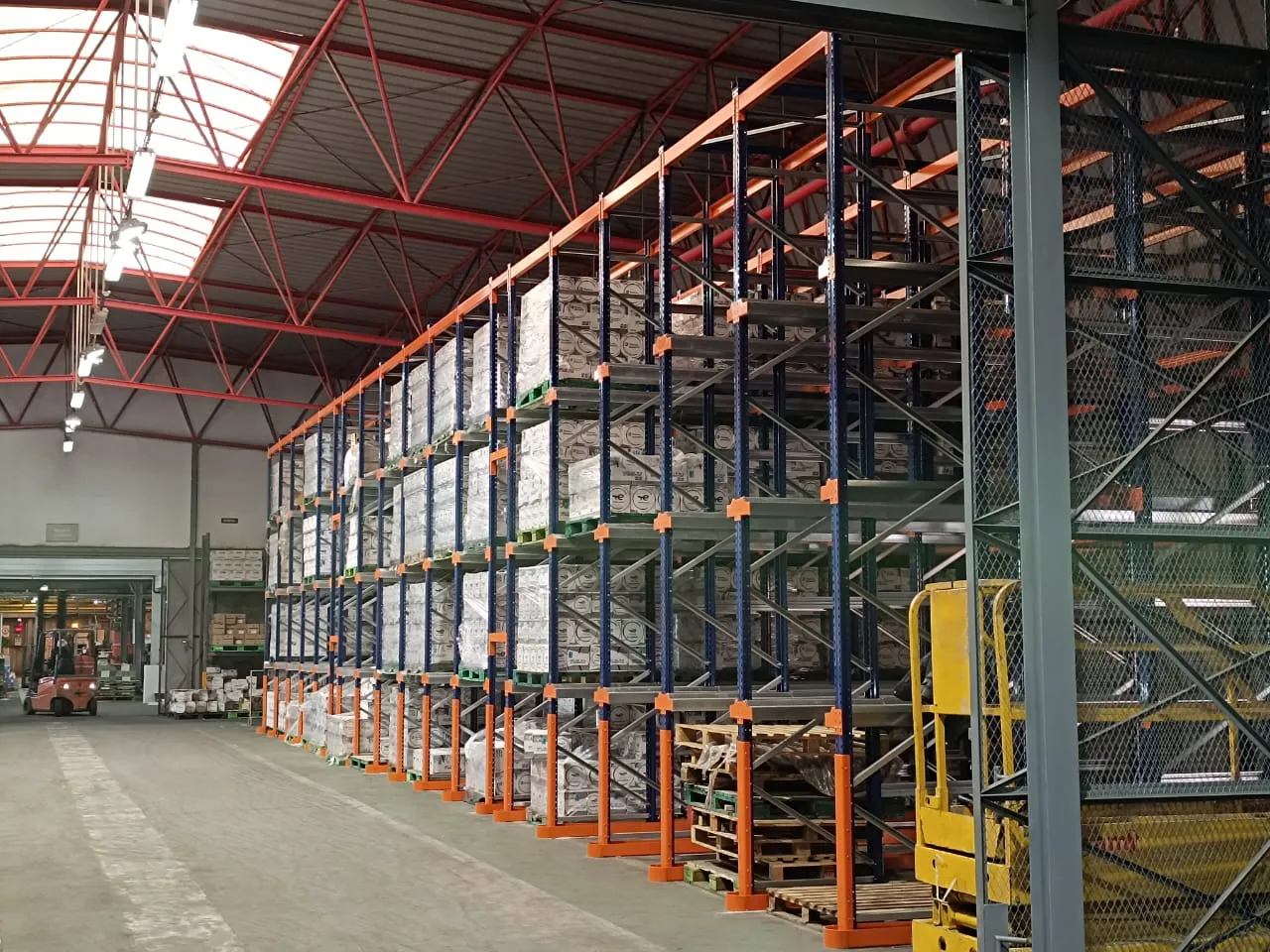
Quick summary: The drive-in system is a compact pallet racking solution that maximises space by eliminating aisles. You should be aware that:
- It operates on the LIFO (last in, first out) or FIFO (first in, first out) principles.
- It is ideal for homogeneous products with low turnover.
- In this system, pallet trucks and stackers (for the lower level) and front-loading forklifts (for the upper levels) can be used.
What is the drive-in system and how does it work (LIFO vs FIFO)
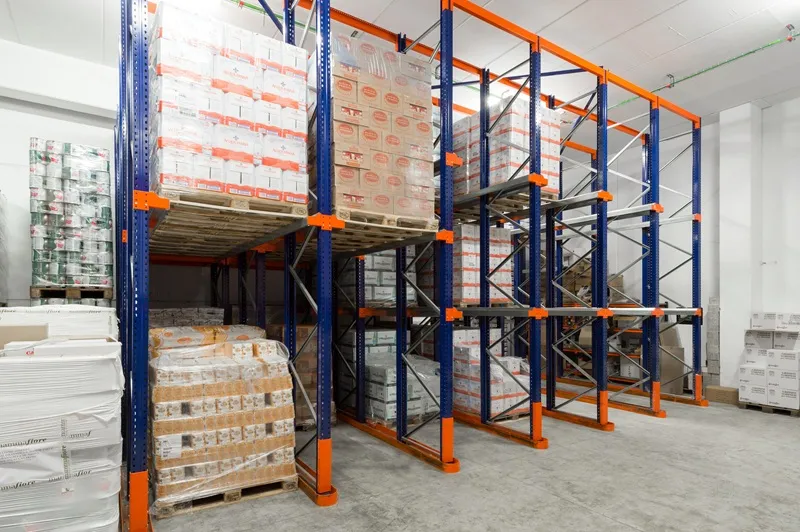
The drive-in system is a compact pallet racking system that eliminates conventional working aisles. Forklift trucks physically drive into the storage aisles to deposit or retrieve loads on support rails.
This operating method dictates how the stock is managed. Due to its single-aisle design with a single front access point, it operates on the LIFO (Last In, First Out) principle: the last pallet to be placed in the aisle must be the first to be removed. In other words, there is no direct access to the pallets at the back until those at the front have been cleared.
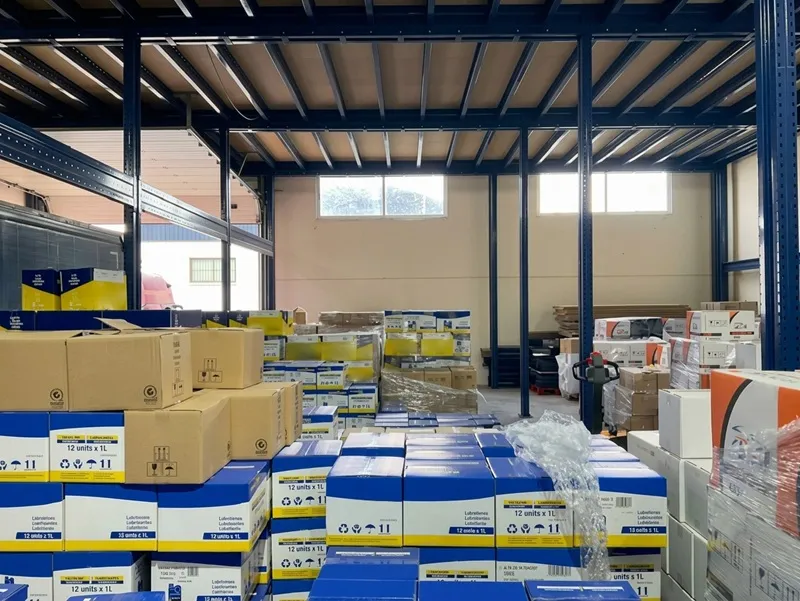
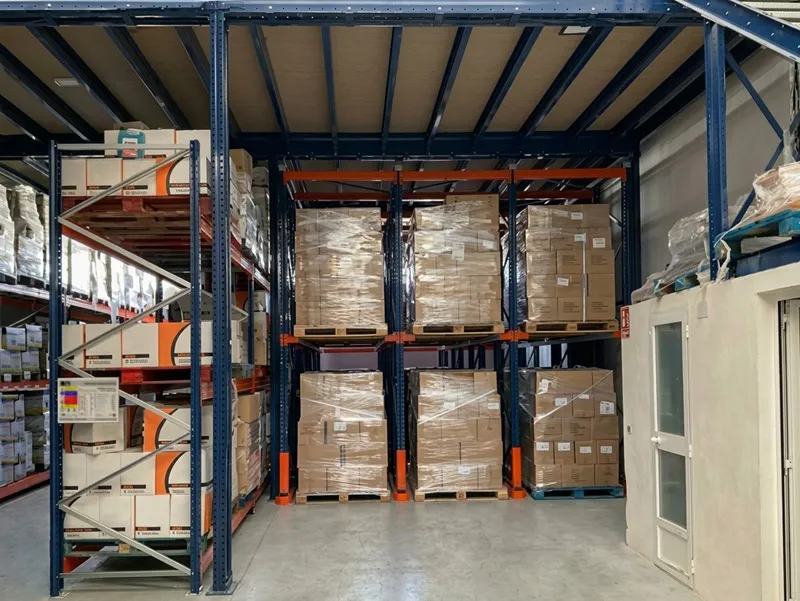
Drive-in vs drive-through: key differences
Although they are often confused, there are fundamental operational differences between the two compact systems.
| Feature | Drive-in system | Drive-through system |
| Access points | A single front access point | Dual access (front and rear) |
| Loading principle | LIFO (Last In, First Out) | FIFO (First In, First Out) |
| Use of space | Maximum compaction against a wall | Requires a loading and unloading bay |
| Ideal application | Large batches with no critical expiry date | High-turnover perishable goods |
When is this the best solution: homogeneous products and high volumes
The design of the internal aisles makes this system particularly well-suited to specific logistics scenarios. It is the perfect solution when storing large volumes of pallets per stock-keeping unit (SKU). As the products are homogeneous, it does not matter which pallet you access first. It is also ideal for slow-moving goods or seasonal storage, where storage capacity takes precedence over picking speed.
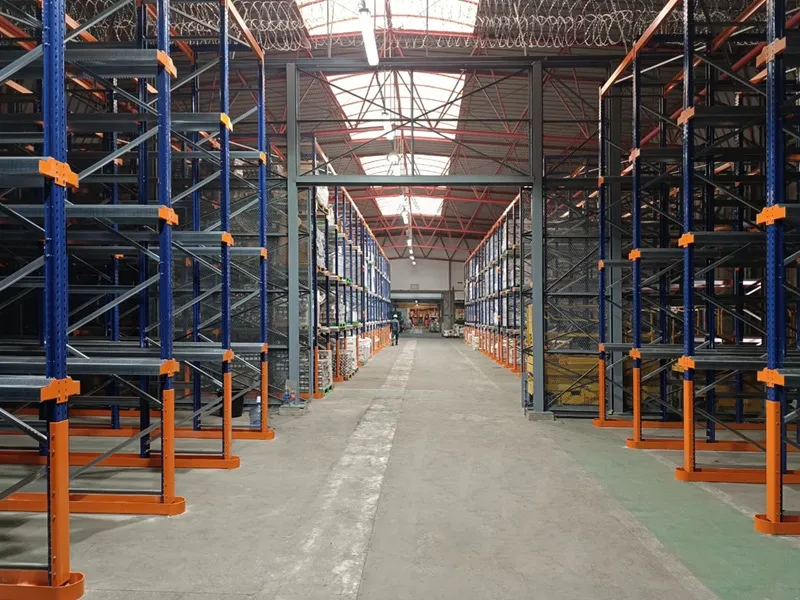
Calculation of space utilisation vs conventional shelving
Compact pallet racking can increase storage capacity by up to 80% compared to a conventional system. By eliminating the aisles between racks, virtually the entire volume of the warehouse is used for goods, drastically reducing the cost per square metre or cubic metre of refrigerated space.
Standard rail dimensions and fork heights
The dimensions of the aisles and support lanes must be calculated down to the millimetre, taking into account the type of pallet and the machinery used, in order to prevent accidents and collapses.
Compatible forklift types: reach trucks and counterbalanced forklifts
To operate within a drive-in system, the forklift must meet certain dimensional requirements. Reach trucks and counterbalanced forklifts are the main types used. It is vital that the overall width of the machine and the protective cab are less than the clear width of the aisle, including a safety margin to prevent collisions with the struts.
Typical sectors: frozen food, beverages and construction
Thanks to its extremely high density, the drive-in is the undisputed king of:
- Cold stores and freezer rooms: where the cost of maintaining the temperature per cubic metre is extremely high and maximum capacity is required.
- Beverage sector: large batches of pallets containing the same product.
- Building materials: bricks or blocks sold in whole packs.
Specific safety regulations for compact systems
Handling goods inside the racking increases the risk of collision. The structures must incorporate guide rails on the floor to keep the forklift truck centred, protective guards on the access uprights, and strictly comply with the UNE-EN 15635 standard regarding tolerances, clearances and annual ITE inspections.
Record products: models and configurations
At Estanterías Record, we manufacture drive-in systems that can be adapted to any load. Our compact pallet racking structures feature optimised cantilevers that provide secure pallet support, as well as top and bottom bracing systems that ensure the block remains completely stable, even at great heights.
Common mistakes when installing drive-in systems and how to avoid them
The most serious mistake is failing to take into account the type of forklift that will be used, resulting in aisles that are too narrow. Another common mistake is the use of poor-quality or damaged pallets, which can warp or break when supported only at their ends on the rails.
Frequently Asked Questions (FAQs)
Not directly. If you need FIFO, the structure must be configured as a drive-through (with a rear entrance) or using dynamic roller conveyors.
This is a hazardous situation. The forklift must remove the front pallets with the utmost care. This is why it is crucial to use standardised pallets (such as Euro pallets) that are in perfect condition.
Yes, due to its large size and constant interaction with the forklift, floor anchors and upper bracing are mandatory.
It is a metal strip fixed to the floor at the entrance and running the entire length of the aisle. Its purpose is to guide the trolley’s wheels so that they do not bump into the side rails.
That’s not possible. The lanes are designed for a specific width. Mixing widths can cause instability within the lane, which carries a potential risk of collapse.
Technically, it can exceed 10 metres, but it will always be limited by the maximum lifting height of the forklift trucks available in the warehouse.
The pallet shuttle uses a motorised satellite trolley to move pallets within the aisle. It is an evolution of the drive-in system that speeds up loading and prevents forklifts from entering the racking.
Yes, Record shelving units are modular and are either bolted or assembled, so they can be dismantled and relocated by qualified personnel, following an assessment of the new site.
It makes it difficult to carry out a visual physical count of the pallets at the back. A robust warehouse management system (WMS) is required to maintain strict control over storage locations.
Does your warehouse need maximum capacity without compromising operational efficiency?
At Estanterías Record, we analyse your product turnover and your material handling equipment to design the most cost-effective solution for your warehouse.
Request a compact storage solution — Quote within 48 hoursNeed more technical details? Download our Compact Palletising catalogue.